

How Long Does Botox Last? An Albuquerque Patient Guide

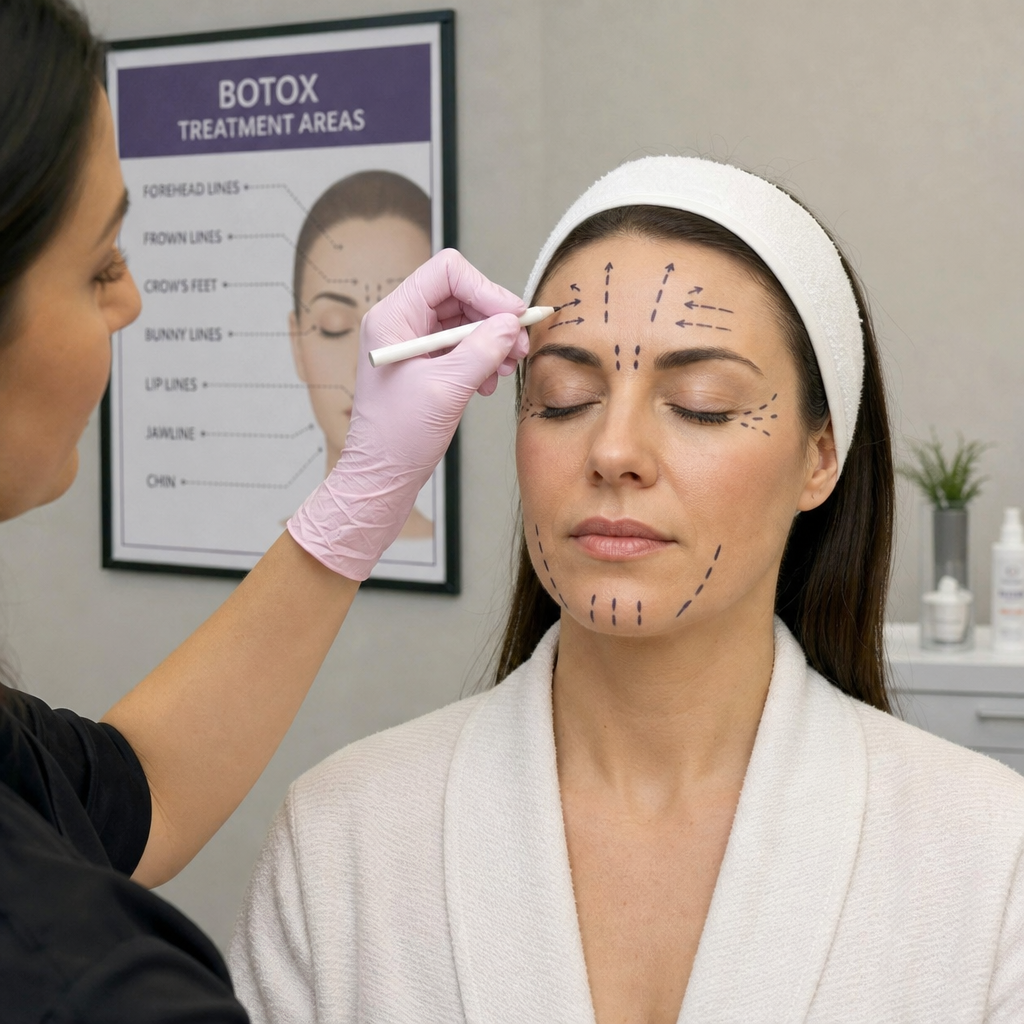
Botox is a temporary injectable treatment used to soften the look of certain expression lines by relaxing targeted facial muscles. For many people considering botox in Albuquerque, results commonly last about three to four months, though some patients notice a shorter or longer window depending on the area treated, dose, metabolism, injector technique, and lifestyle. This guide explains realistic timelines, maintenance planning, and what to avoid after botox so you can have a more informed consultation.
This article is for general education only and is not medical advice. Botox Cosmetic is a prescription treatment, and your personal plan should come from a qualified medical provider who reviews your health history, medications, goals, and facial anatomy.
How long does botox last for most patients?
For cosmetic wrinkle treatment, Botox often lasts around three to four months, with some people seeing effects fade closer to two months and others enjoying results into the four- to six-month range. The American Society of Plastic Surgeons describes typical improvement from botulinum toxin treatment as lasting about three to four months, while the official Botox Cosmetic labeling describes temporary improvement rather than permanent change.
Results do not usually appear instantly. Many patients begin noticing softening within several days, with the full effect commonly assessed around two weeks after treatment. From there, movement gradually returns as the treated muscles recover activity, so the transition tends to be gradual rather than an overnight change.
Typical duration by treatment area
The ranges below are general expectations, not guarantees. Your provider may recommend a different dose or schedule based on your muscle strength, previous treatment history, and desired level of movement.
- Forehead lines (about 3 to 4 months): Often treated conservatively to preserve natural brow movement.
- Frown lines between the brows (about 3 to 4 months): A common treatment area for “11” lines caused by repeated frowning.
- Crow’s feet (about 2 to 4 months): This delicate, expressive area may fade sooner for some patients.
- Brow lift or brow balancing (about 2 to 4 months): Longevity depends heavily on placement and facial anatomy.
- Bunny lines on the nose (about 2 to 3 months): Small muscles and frequent expression can mean a shorter window.
- Lip flip (about 6 to 10 weeks for many patients): Often uses smaller doses, so effects may wear off sooner.
- Chin dimpling (about 3 to 4 months): May last longer or shorter depending on muscle activity.
- Masseter treatment (about 3 to 6 months): Larger muscles may need a different approach and follow-up timing.
Why Botox longevity varies from person to person
Botox longevity in Albuquerque is not controlled by one factor. Two patients can receive treatment on the same day and still have different timelines because their facial muscles, goals, and daily habits are different. Understanding those variables can help you set expectations without feeling like your results are “wrong” if they do not match a friend’s experience.
Dose matters because smaller or more conservative treatments may fade sooner, while an appropriate dose for stronger muscles may last longer. That does not mean more is always better; over-treating can create heaviness or an unnatural look, so dosing should be individualized by a trained injector.
Metabolism can also play a role. Some people simply process neuromodulators faster than others, and very active individuals may notice they return for maintenance on the earlier side of the typical range. Activity level is not a flaw or a reason to stop exercising, but it is worth discussing if you train intensely or spend a lot of time outdoors.
Injector technique is one of the most important controllable factors. Placement, depth, symmetry, dilution, and understanding of facial anatomy all influence how natural the result looks and how well it holds. A careful injector will evaluate muscle movement at rest and during expression rather than treating every face with the same pattern.
Your treatment history may matter too. Some regular patients find their maintenance rhythm becomes more predictable over time because treated muscles are not contracting as strongly between visits. Still, Botox remains temporary, and no injector can promise a specific number of months for every patient.
Albuquerque lifestyle factors that can affect your results
Albuquerque’s high-desert environment can be beautiful, but it also asks more from your skin. The city is known for dry air, low humidity, and abundant sunshine; local visitor information also notes that the area’s elevation is over 5,000 feet and recommends hydration and sun protection.
Sun exposure does not “turn off” Botox, but it can accelerate visible skin aging, dryness, and texture changes that make lines more noticeable. If you want long-lasting Botox results to look their best, pair treatment with daily broad-spectrum sunscreen, sunglasses, hydration, and a simple moisturizer that supports your skin barrier. This is especially useful if you hike near the Sandias, run along the Bosque, drive long distances in bright sun, or spend time at outdoor events.
Local scheduling matters as well. If you are planning Botox before a wedding, reunion, work presentation, or photos, avoid booking at the last minute. Many providers prefer patients to allow about two weeks for the treatment to fully settle and to leave time for follow-up guidance if needed.
How often should you get Botox to maintain results?
Most patients who like their outcome schedule maintenance every three to four months, but the right answer to how often should you get botox depends on your treatment area, muscle strength, budget, and preference for movement. Some patients return as soon as they see stronger motion coming back; others prefer a softer schedule and are comfortable letting results fade more between appointments.
A practical maintenance plan usually starts with your first treatment, a two-week assessment if your injector recommends it, and then a return visit when movement begins to reappear. If your results consistently fade at ten weeks, your provider may adjust the dose or timing. If they last closer to five months, you may not need the standard three-month schedule.
Preventative Botox is a slightly different conversation. Patients in their mid-20s to early 30s sometimes choose smaller, strategic treatments to reduce repetitive muscle folding before deeper static lines form. Corrective Botox, by contrast, is often used when lines are already visible at rest. Neither approach is automatically better; the right plan depends on your anatomy, skin quality, goals, and medical suitability.
What should you avoid after Botox?
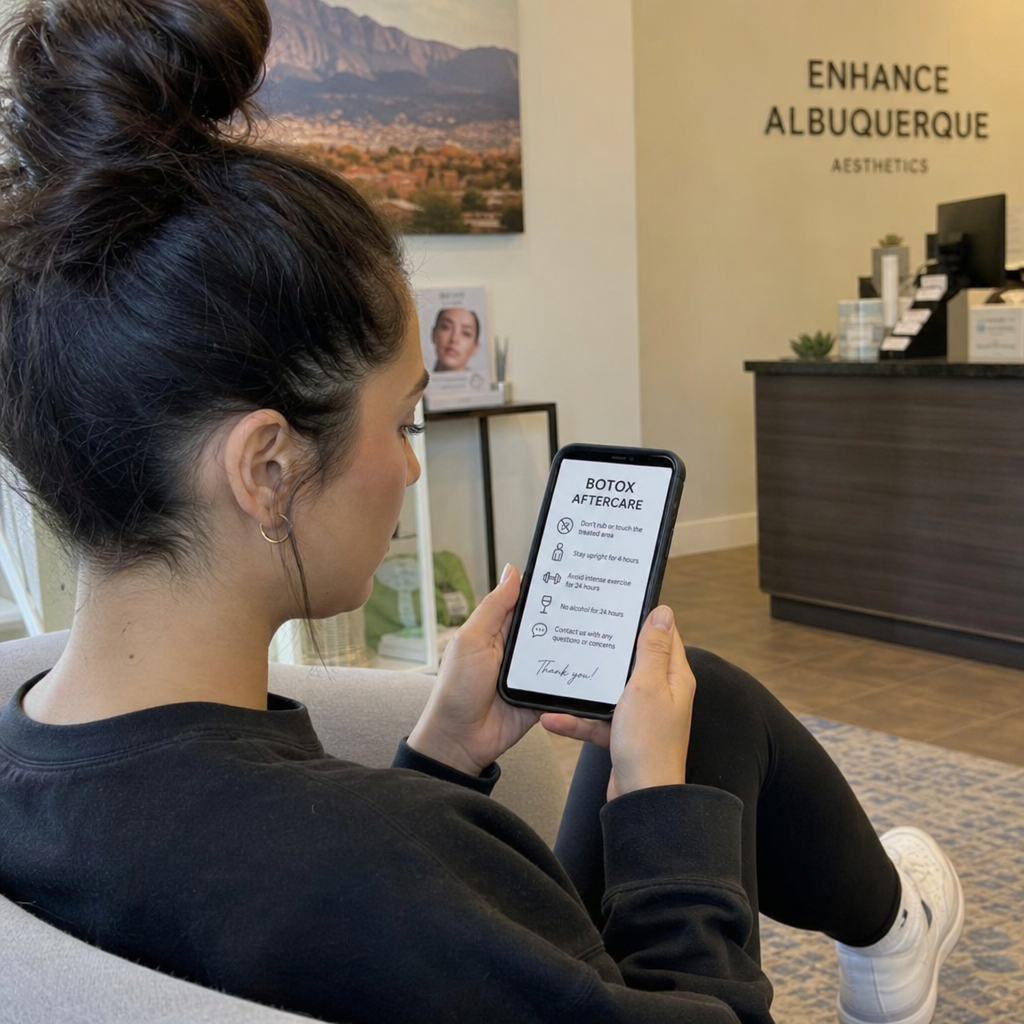
Aftercare is meant to reduce irritation, bruising risk, and unwanted pressure on the treated areas while the product settles. Instructions vary by provider, so always follow the plan you receive at your appointment. The American Academy of Dermatology advises patients not to rub or massage injected areas and to avoid heavy lifting, workouts, or other physical activity that raises the heart rate right after treatment.
Common post-treatment guidance may include:
- Do not rub, press, or massage the treated areas unless your provider specifically tells you to. This includes facial massage tools, gua sha, and aggressive cleansing.
- Avoid strenuous exercise for the period your injector recommends, often the rest of the day. Gentle walking may be acceptable for many patients, but ask first.
- Avoid lying flat for several hours if your provider includes this in your instructions, especially after forehead, brow, or frown-line treatment.
- Skip alcohol shortly before and after treatment if advised, because it may increase bruising risk for some patients.
- Ask about blood thinners, NSAIDs, and supplements before stopping anything. Never discontinue a prescribed medication without medical guidance.
- Postpone facials, lasers, microneedling, or strong peels until your injector says it is safe, particularly if the treatment area overlaps.
- Call your provider about concerning symptoms, such as significant swelling, signs of infection, trouble swallowing, trouble breathing, vision changes, or muscle weakness beyond what was expected. Serious reactions are uncommon, but Botox labeling includes warnings about possible spread of toxin effect, so prompt medical guidance matters.
Setting yourself up for a natural, lasting result
The best Botox plan is usually measured, personalized, and easy to maintain. Before your appointment, make a short list of your goals: Do you want fewer forehead lines while keeping expression? Are crow’s feet your main concern? Are you trying to look rested without looking frozen? Clear goals help your injector choose placement and dose more thoughtfully.
During the consultation, ask direct questions about experience, training, product used, expected onset, follow-up policy, and how many units may be appropriate for your face. You can also ask how the provider handles asymmetry, touch-up timing, and future maintenance. Botox Cosmetic and other neuromodulators are not interchangeable unit-for-unit, so it is reasonable to confirm exactly what is being injected.
For ongoing care, track your own timeline. Take a photo before treatment, another around two weeks later, and another when movement starts returning. This gives you and your Albuquerque injector useful information for refining your next visit.
The takeaway for Albuquerque patients
So, how long does botox last? For many cosmetic patients, the realistic answer is about three to four months, with normal variation by area, dose, metabolism, injector technique, and activity level. Albuquerque’s dry, sunny climate also makes skin care habits, especially sunscreen and hydration, important partners to any injectable plan.
If you are considering botox in Albuquerque, use this guide as a starting point, not a substitute for medical advice. A qualified provider can help you decide whether Botox is appropriate, what schedule makes sense, and how to maintain a result that fits your face and lifestyle.
Read More Blogs!
Stay updated with the latest blog posts and engage with our community.
