

Nurse Practitioner vs Doctor: An Albuquerque Primary Care Guide

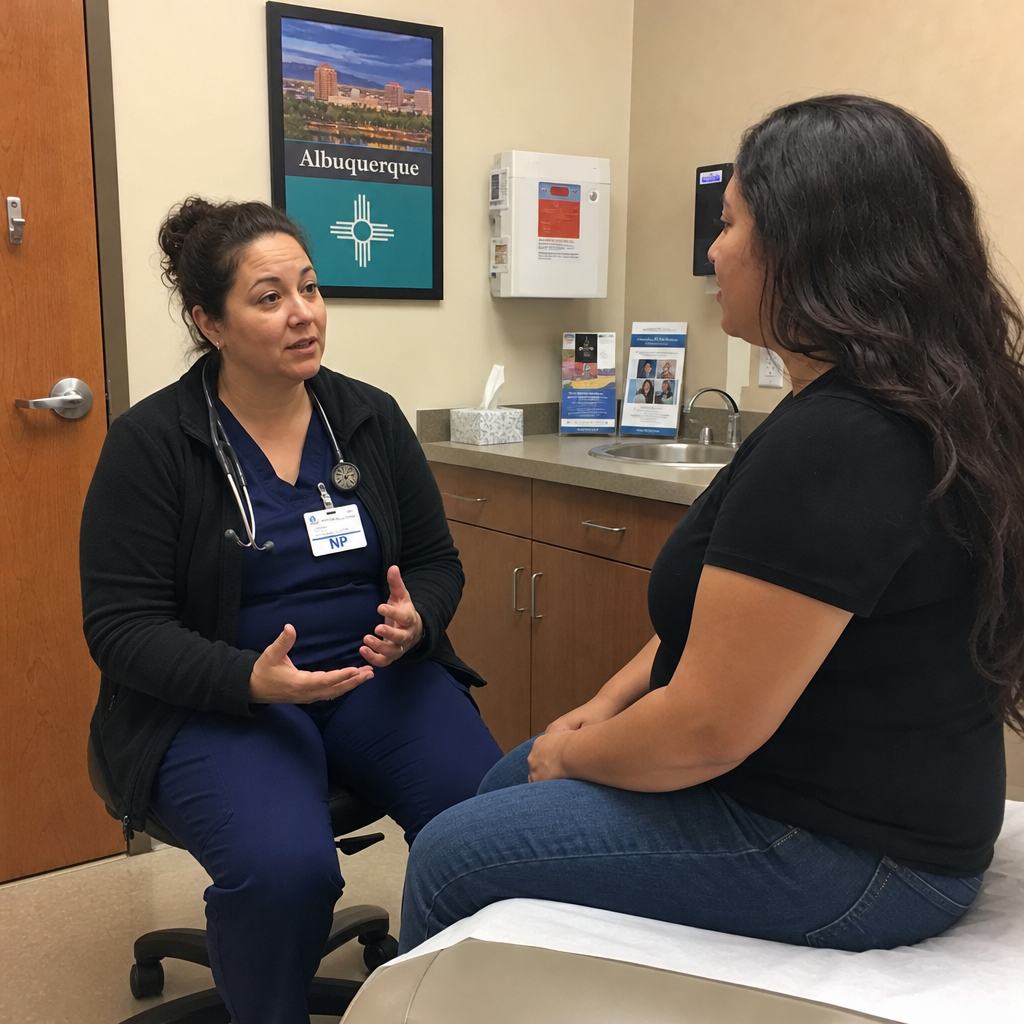
Choosing a primary care provider in Albuquerque often starts with a practical question: should you see a nurse practitioner or a doctor? Both can be excellent first points of contact for everyday health needs, preventive care, and long-term health planning. The right choice depends on your health status, your preferences, the type of care you need, and how quickly you want to be seen.
What is the difference between a nurse practitioner and a doctor?
The simplest nurse practitioner vs doctor distinction is training path and scope. A doctor, often an MD or DO, completes medical school and then residency training in a specialty such as family medicine, internal medicine, or pediatrics; the AAMC describes the physician education path as college, medical school, and several years of residency depending on specialty. A nurse practitioner is a registered nurse who completes an NP-focused graduate master’s or doctoral program and national board certification, with training tied to a population focus such as family, pediatrics, adult-gerontology, or women’s health.
In primary care, the day-to-day overlap can be significant. Both may evaluate symptoms, order tests, diagnose common conditions, prescribe medications, manage ongoing health issues, and refer to specialists when needed. The difference is not that one “cares” and the other “treats”; it is that they arrive through different professional models and may approach care through different lenses.
Understanding NP vs MD training in primary care
When people compare NP vs MD care, they often focus only on years of training. That matters, but it does not tell the whole story. Doctors receive broad medical training and residency experience designed to prepare them for complex diagnosis, acute illness, procedures, hospital care, and specialty-level decision-making. That depth can be especially helpful when symptoms are unusual, conditions overlap, or a patient needs intensive coordination across specialists.
NPs build on nursing experience and graduate clinical education. Their preparation often emphasizes health promotion, prevention, patient education, and practical chronic disease support. In primary care, that can translate into visits that spend meaningful time on medication understanding, lifestyle barriers, screenings, family context, and follow-through.
A useful way to think about nurse vs doctor care is not “better or worse,” but “best fit.” Many routine primary care needs can be handled well by either provider type, while medically complex situations may call for a physician-led or highly collaborative care plan.
What can a nurse practitioner do in New Mexico?
In New Mexico, certified nurse practitioners have full practice authority, which means state practice and licensure laws authorize NPs to evaluate patients, diagnose conditions, and prescribe medications and therapeutic measures. New Mexico law also recognizes certified nurse practitioners as providers who may practice independently and serve as primary, acute, chronic, long-term, and end-of-life health care providers, collaborating with physicians and other clinicians when needed.
For an Albuquerque patient, that means a nurse practitioner as primary care provider can usually handle many of the same first-line needs people associate with a family doctor’s office. The exact services depend on the clinic, the NP’s certification, patient age group, and clinical focus, but primary care commonly includes:
- Preventive visits: annual wellness exams, screenings, immunization review, lab monitoring, and risk-factor counseling.
- Acute concerns: sore throat, cough, urinary symptoms, minor skin issues, medication questions, and other common non-emergency problems.
- Chronic disease management: follow-up for conditions such as high blood pressure, diabetes, asthma, thyroid disease, or high cholesterol.
- Medication management: starting, adjusting, refilling, and monitoring prescriptions when appropriate.
- Referrals and coordination: connecting patients with specialists, imaging, labs, or higher levels of care when symptoms require more evaluation.
- Health coaching: helping patients understand test results, treatment options, lifestyle changes, and next steps.
This is one reason the phrase “what can a nurse practitioner do” often has a broader answer than people expect. In New Mexico primary care, NPs are not simply assistants in the exam room; they can be the clinician leading the visit.
The care experience may feel different
Many patients choose an NP because they want accessible, relationship-based care. Nurse practitioners are often known for education-heavy visits, collaborative decision-making, and a whole-person view of health. That does not mean doctors cannot practice this way; many do. It simply reflects the nursing foundation that many NPs bring into primary care.
Doctors may be the preferred starting point for patients who already know their situation is medically complicated. For example, someone with several uncontrolled chronic conditions, a history of repeated hospitalizations, rare symptoms, or a need for procedure-heavy care may benefit from a physician’s broader medical training and specialty network. In real life, the strongest primary care practices do not treat NP and MD roles as rivals. They use each clinician’s strengths and refer when the patient’s needs change.
When an NP may be the right primary care choice
A nurse practitioner can be a strong fit when your main goal is steady, accessible primary care. This is especially true if you are generally healthy, overdue for preventive care, managing a stable chronic condition, or looking for a provider who has time to explain the “why” behind a plan.
Consider an NP-led clinic if you want:
- A preventive care focus. You want help staying ahead of health problems, not only reacting when something feels wrong.
- Support for stable chronic conditions. You need regular labs, medication adjustments, and practical coaching for issues like blood pressure, diabetes risk, cholesterol, or weight-related health concerns.
- A more conversational visit style. You value education, shared decisions, and a provider who helps connect daily habits to long-term outcomes.
- Local appointment access. In many communities, including Albuquerque, NP-led care can expand primary care availability when traditional doctor appointments are hard to get.
- Family-centered care. Parents may appreciate a practice that can care for children and adults while building long-term familiarity.
When a doctor may be the better first call
A doctor may be the better first choice when symptoms are severe, unusual, rapidly worsening, or connected to complex medical history. If you have multiple specialist-managed conditions, need a procedure, have unclear symptoms after initial testing, or require hospital-level coordination, an MD or DO may be better positioned to lead or co-manage your care.
You should also consider a physician or urgent/emergency care setting for red-flag symptoms such as chest pain, signs of stroke, severe breathing problems, sudden weakness, major injury, or uncontrolled bleeding. Primary care, whether NP-led or physician-led, is not a substitute for emergency care.
The practical takeaway is simple: start with the provider who fits your current need, but expect good clinicians to know when to escalate. A skilled NP will refer to a physician or specialist when a condition falls outside the best scope of primary care. A skilled doctor will also involve NPs, nurses, pharmacists, therapists, and specialists when team-based care serves the patient better.
Comparing nurse practitioner vs doctor care in Albuquerque
For local patients searching “nurse practitioner vs doctor albuquerque,” access is often part of the decision. Albuquerque residents may be balancing work schedules, family responsibilities, insurance networks, transportation, and wait times. A provider who can see you consistently may be more useful than the “perfect” provider you cannot get in to see.
Here is a practical comparison to guide the choice:
- Annual checkups and prevention: NP primary care is a strong fit for screenings, labs, education, and wellness planning. Doctor primary care is also a strong fit, especially with broader risk assessment needs.
- Minor acute illness: NP primary care is a good fit for many common non-emergency concerns. Doctor primary care is a good fit, especially if symptoms are atypical or worsening.
- Stable chronic conditions: NP primary care is a good fit for follow-up, medication monitoring, and lifestyle support. Doctor primary care is a good fit for more complicated medication regimens or overlapping diagnoses.
- Complex medical history: An NP is helpful as part of a coordinated team. A doctor is often better as lead provider or co-manager.
- Patient education and coaching: This is often a major strength of NP-led care, and it is available from many physicians, depending on practice style.
- Procedures or specialty-level decisions: An NP may refer when needed. A doctor is more likely to manage or direct advanced evaluation.
This comparison is a guide, not a rule. Credentials matter, but so do communication, availability, trust, and whether the provider listens carefully to your goals.
How to choose your Albuquerque primary care provider
Before choosing between a nurse practitioner and a doctor, start with your real-life priorities. If you rarely see a provider and mainly need preventive care, labs, medication refills, and a long-term wellness plan, an NP-led clinic may be a convenient and clinically appropriate option. If you have complex disease, frequent complications, or symptoms that have been difficult to diagnose, you may want a physician involved early.
Use this short checklist before scheduling:
- Confirm the provider’s focus. Family, adult, pediatric, women’s health, and other training areas are not interchangeable.
- Ask about insurance. Coverage can vary by plan, even at clinics that accept major insurers.
- Check appointment options. Ask about new-patient availability, follow-up timing, telehealth, and same-week sick visits.
- Describe your medical complexity honestly. Mention hospitalizations, specialists, major diagnoses, and current medications when booking.
- Notice communication style. A good primary care relationship should feel respectful, clear, and sustainable.
- Ask how referrals work. You want a provider who knows when to manage, when to monitor, and when to send you to another expert.
Primary care is not only about who signs the prescription. It is about having a clinician who understands your baseline, catches changes early, and helps you make decisions before small problems become larger ones.
The bottom line for Albuquerque patients
The nurse practitioner vs doctor decision is best made around your needs, not assumptions about titles. In New Mexico, nurse practitioners can serve as primary care providers, diagnose conditions, prescribe medications, and manage many common health concerns independently within their training and certification. Doctors bring deeper medical and residency training that can be especially important for complex, severe, or unclear conditions.
If you are looking for accessible, prevention-minded care in Albuquerque, an NP-led primary care practice may be a strong place to start. If your health picture is complicated, a physician-led or collaborative team may be the safer fit. Either way, the best provider is the one who offers competent care, clear communication, appropriate referrals, and a relationship you can rely on over time.
Read More Blogs!
Stay updated with the latest blog posts and engage with our community.
